Over 2.3 billion people use instagram world wide. That’s a lot of people sharing a lot of information. How can Instagram ensure that misinformation is not being spread?
One way that instagram has historically done this is through fact checkers. Before 2025, Meta, the company that owns Instagram and Facebook, used third party fact checkers which utilized independent experts. These fact checkers would rate content with these specified ratings, “False, Altered, Partly False, Missing Context, Satire, and True.” Meta also uses technology (automated systems) that scan content for policy breaches. Recently Meta discontinued the use of independent fact checkers. According to a Meta news article, these independent fact checkers became too biased about legitimate content and “became a tool to censor.”
This makes me wonder if the safeguarding of misinformation censors the right to free speech?
In some (court) cases the answer is yes.
According to the article Is Discouraging Misinformation on Social Media Censorship?.
A judge barred “all communication by the Biden administration with social media platforms” in 2023. The judge listed “ 22 occasions where White House staff pressured social media companies.” This decision came about after the 2022 court case against former president Biden for “suppressing free speech regarding Covid-19.” Some would consider it is up to the private entity to determine what is banned or labeled as misinformation, therefore not censorship. Then again if it is government agencies pressuring platforms this can be seen as censorship.
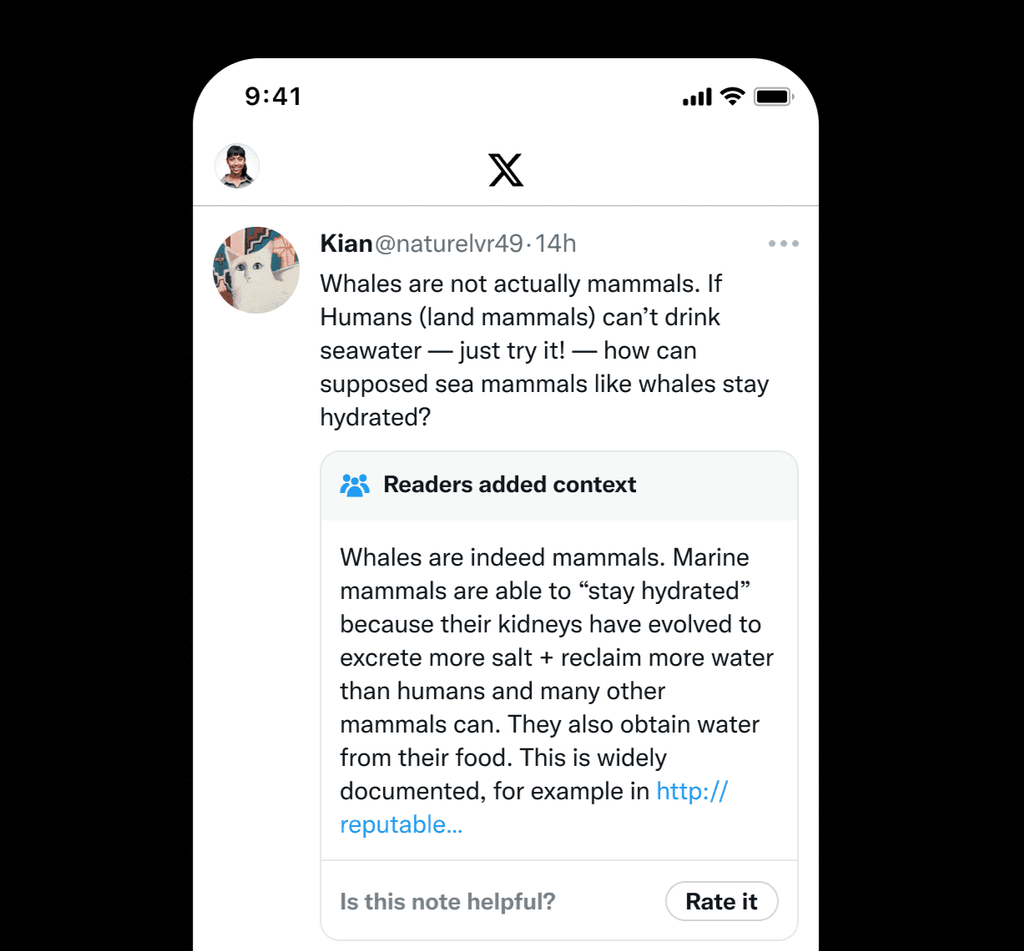
Anyways, to combat this Instagram came up with the Community Notes solution. This approach is also used by Twitter. Basically this allows “contributors” or regular people on twitter to add context to misleading posts. On Twitter these community notes are visible to the public and “open source” so anyone can audit, analyze or suggest improvements. Twitter and Meta are unable to edit or change the notes, which makes these corrections less biased by the site itself. I find this pretty cool, like the company really cares about genuine findings and isn’t just covering up unwanted posts/ content.
Example of Note on Twitter:
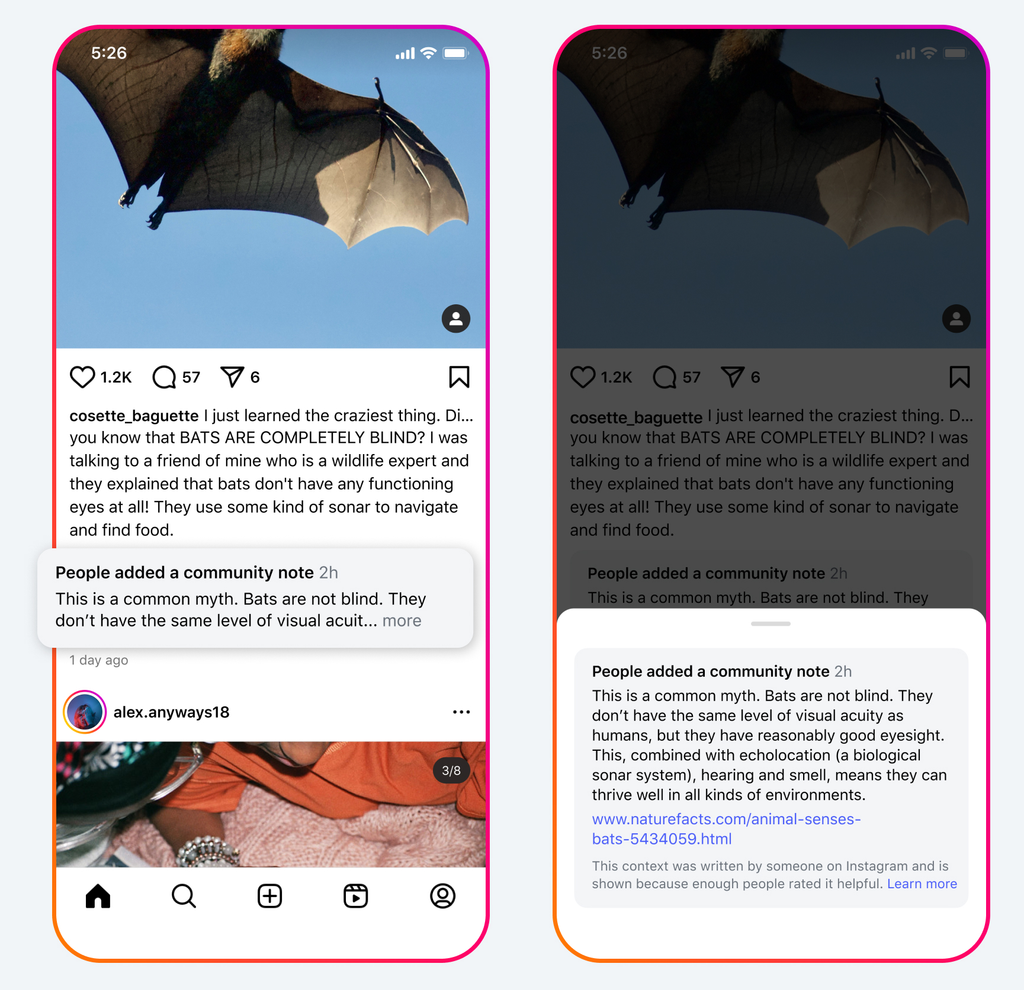
This is pretty much the same method that is used now by Meta.
Example of Instagram Note:
They will also still implement their automated systems which previously, “resulted in too many mistakes and too much content being censored.” Now these will be used for “tackling illegal and high-severity violations, like terrorism, child sexual exploitation, drugs, fraud and scams.”
Another main policy detail listed on Meta is what types of misinformation is removed outright on the app. These criteria include: physical harm or violence, harmful health misinformation, voter or census interference. Manipulated media is also listed as a criteria that undergoes scrutiny. (Which I believe will become even harder to determine or govern with the growth of AI).
With this I also looked up Instagram’s AI policy, which does have a quite extensive list of images that are not allowed including living people other than oneself without permission, fictional characters without copyright permission, religious figures, murderers, hate groups, government entities etc..
Although Meta also prohibits imagery depicting nudity, violence, etc, many recent articles within the past 2 weeks (Wired, Futurism) claim that across Meta apps ads were displaying child exploitation and abuse. These ads also used images of real children, in one case using imagery of a child from a European royal family. Reportedly, these ads came out prior to Meta’s launch of an AI tool for detecting and blocking harmful ads.
With this information, Meta seemingly needs work on their AI detectors as well as monitoring what type of imagery is being posted online. Using AI to detect other AI is an interesting concept, and seemingly would help catch the swaths of unwanted content that are no doubt posted every second of every day. (literally billions of people posting content daily)
According to Security.org, “42% of Facebook users report encountering misleading or false information regularly” and 35% of TikTok users claim the same thing. (to make my point about the insane amounts of misinformation)
Anyways, I believe the Community Notes approach will prove to be a helpful and successful tool for safeguarding against misinformation. As we have learned, cognitive science shows that collaboration and “groups that incorporate diversity of thought – are essential for improving our ability to solve problems and find solutions.”
In summary I believe stopping the spread of all misinformation on social media is impossible, but the lengths at which Meta is going about stopping the spread is, in the least, somewhat hopeful.
Leave a Reply